

Roof Rats vs Norway Rats in the Lowcountry: How to Tell Them Apart
The two rat species in Charleston behave differently. How to tell a roof rat from a Norway rat, where each one nests, and why it changes the removal plan.
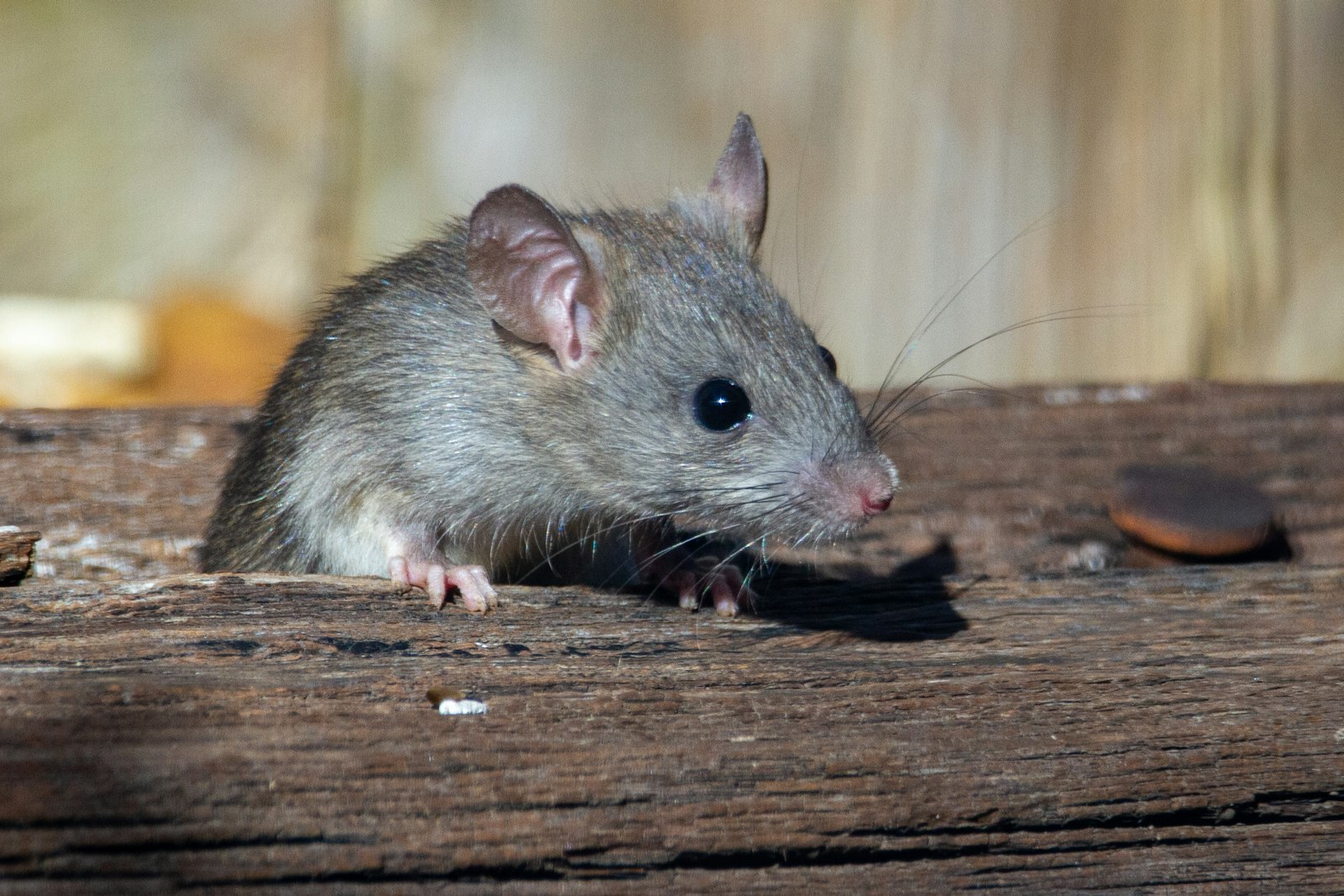
Charleston has two kinds of rats, and they are not interchangeable. A roof rat and a Norway rat look similar enough to a homeowner at 2 a.m., but they live in different parts of your house, enter through different gaps, and get caught with traps set in different places. Treating them as one animal is how a removal job misses half the colony.
Here is how to tell which one you have, and why the answer changes everything about how the problem gets solved.
Roof rats: the climbers in your attic
Roof rats (Rattus rattus), also called black rats, are the dominant species on the Charleston peninsula and through most of the Lowcountry. They are built to climb. Slender bodies, a tail longer than the head and body combined, big ears, and a pointed face. If you see one, it is usually running a power line or a fence rail, not crossing the floor.
Because they climb, roof rats live high. Attics, upper walls, the tops of cabinets, and the canopy of live oaks and palmettos that hang over so many Charleston roofs. They get inside at the roofline: gable vents, soffit and fascia gaps, dormer joints, and the spots where utility lines enter under the eave. The scratching you hear overhead at night is almost always roof rats, and they are the reason so much of rat control here happens on a ladder. If you are trying to sort out whether the noise overhead is a rat or something else, our guide to the difference between rats and squirrels in the attic covers the tells.
Norway rats: the burrowers down low
Norway rats (Rattus norvegicus), or brown rats, are the other species, and they are the opposite animal in almost every way. Heavier, stockier bodies, a blunt nose, smaller ears, and a tail shorter than the body. They are poor climbers and strong diggers, so they work at ground level: crawlspaces, foundations, the spaces under sheds and decks, and burrows along the perimeter.
In Charleston, Norway rats are most common where there are crawlspace foundations and grade-level access, which describes a lot of North Charleston, Park Circle, and the older neighborhoods off the peninsula. They tunnel under slabs, exploit gaps where pipes pass through the foundation, and nest in the crawlspace rather than the attic. The damage they cause skews toward foundation penetrations, gnawed crawlspace wiring, and burrows that undermine the perimeter.
Why the difference decides the removal plan
This is the part that matters. The two species require the work to happen in different places, and a plan built for one will miss the other.
For roof rats, the entire job lives up high. The inspection focuses on the roofline and the upper structure, the traps go on the elevated runways where they actually travel, and the exclusion seals soffit gaps, vents, and roofline penetrations. Set traps on the crawlspace floor for a roof rat and you will wait a long time, because the animal is never down there.
For Norway rats, it inverts. The inspection works the foundation perimeter and the crawlspace, the traps go on ground-level runways and near burrow openings, and the exclusion seals foundation gaps, pipe penetrations, and the points where the structure meets the dirt. The roofline is mostly irrelevant.
Plenty of Charleston homes have both. A peninsula house with a crawlspace foundation and an attic under an oak canopy can run roof rats up top and Norway rats down below at the same time, which is exactly why a proper inspection covers the whole structure rather than chasing the one noise you happened to hear. Sealing every gap larger than half an inch, top to bottom, is the only approach that handles both, and it is the core of how professional rodent exclusion actually ends the problem.
Telling them apart from the evidence
You will rarely get a clear look at the animal, so most identification comes from what it leaves behind:
- Location of the sound. Overhead and in the walls means roof rats. Under the floor, in the crawlspace, or along the foundation means Norway rats.
- Droppings. Roof rat droppings tend to be slightly smaller with pointed ends. Norway rat droppings are larger with blunt ends. Both are dark and capsule shaped, and both are bigger than a mouse dropping.
- Where the damage is. Gnawed soffits, roofline gaps, and chewed attic wiring point to roof rats. Burrows along the foundation, gaps under the slab, and crawlspace damage point to Norway rats.
- Grease marks. Both species leave dark rub marks from the oil in their fur along the routes they travel. Trace where those marks run and you have traced the colony's highway.
Behavior and diet, and why it changes the trapping
The two species do not eat or behave the same, and that affects how they get caught. Roof rats lean toward fruit, nuts, and plant matter, which fits their life in the trees and the upper structure, so the lure that draws them onto a trap is often something like nut butter or dried fruit. Norway rats are less picky and more drawn to proteins and grains, so they respond to different bait down at ground level.
Temperament differs too. Both species are neophobic, wary of anything new in their territory, but roof rats are especially cautious, which is why a rushed trapping job up in the attic stalls out in the first few days. The traps have to sit on the established runways and get a little time to stop being suspicious. Reading those runways, the greasy rub marks and the worn paths, is how you place traps where the animal already travels instead of where you hope it will go. Get the species wrong and you get the bait wrong, the placement wrong, and the timeline wrong all at once.
The Charleston pattern
If you had to bet, bet on roof rats. The combination of a warm climate, dense tree cover, and a lot of older homes with roofline gaps makes the Lowcountry close to ideal for them, which is why they are the species most Charleston homeowners are dealing with. The most common entries are predictable enough that we mapped the gaps roof rats use to get into Charleston homes.
But the homes with crawlspaces, and there are many, can run Norway rats at grade at the same time. The only way to know what you are actually dealing with is to inspect the whole structure rather than guess from a single sound.
Not sure which one is in your house? That is exactly what an inspection settles. See how we handle rat removal in Charleston for both species, or call (843) 212-1147 to get it identified and gone.
Rodent Exclusion Service
Professional rodent exclusion, not just bait stations. We seal the entry points so the problem doesn't come back.
See our rodent exclusion service